


PRIDE Spotlights: Ron Roellig and Keeley Civil Infrastructure
Claire Sauer • February 24, 2025
At Keeley, we are driven by our mission and core values and these core values guide every decision. Each value has its own meaning for everyone, but this common ground allows us to come together and foster a culture of support, safety, well-being, and family. We sat down with Ron Roellig, Executive Vice President of Civil, to discuss our core values and how he sees them lived out every day amongst his team.
PEOPLE
– Don Recar exemplifies People in the way he goes above and beyond for his team members. When he saw a team member personally struggling, he put business aside and showed empathy by reaching out and connecting him with those that could help and provide the proper resources. This team member even expressed gratitude about how Keeley (and Don) goes above and beyond for Keeley’ns.
RESPECT
– At August’s Civil STP, the entire Civil Day Two team had open and honest dialogue while still showing respect to each other when asking tough questions and challenging each other. This was the first STP with new leadership in place and it was collaborative, open-minded day. Everyone provided strategic, constructive criticism which only allows for growth. If we fail to give constructive criticism, we are failing our team members and ourselves. Throughout the day, everyone listened intently and respected opinions and differing perspectives. Everyone left with clear APs, excitement for what’s to come, and a renewed energy. After the STP, we had a record-breaking month of August and I truly believe this STP set the tone for this new chapter of Keeley Civil.
INTEGRITY
– Jason Forney and the team at the Coffeen Solar Farm were facing adversity with a team member who experienced an injury on the project. Jason followed Keeley’s protocol and immediately got the team member the care he needed. However, our client indicated that we had not followed their protocol for notification. Jason, as the Keeley onsite Supervisor, owned the failure and committed to improvement moving forward doing Whatever It Takes for Safety.
DISCIPLINE
– The Estimating Team had been feeling extreme pressure in the first and second quarters of 2024 to find and secure new projects after experiencing a slow third and fourth quarter for bidding in 2023. They dealt with this pressure phenomenally and didn’t let bid declines get them down. The team stayed disciplined and continued to put forth their best effort. By remaining steadfast and avoiding panic buying, they have set up a successful path for the end of 2024 into 2025. Because of their hard work, we have a record-breaking year of backlog going into 2025!
EMPOWERMENT
– Our first example of Empowerment is Tim Eagan. Tim and his entire solar farm project teams developed solid work plans outlining personnel, equipment, and strategy for exemplary execution of work on multiple solar farm projects, including additional opportunities with a new client. They have achieved tremendous success in this market and we now have more resources on these jobs than any other project. This focus on growth in the solar farm market allows us to gain more experience and bid more work across the nation. Our second example of Empowerment is John Stackpole. With very little guidance or oversight, John continues to execute and deliver impactful results, thus opening up doors for emerging markets and new clients. What he has done for Civil Infrastructure by kicking down doors, fostering meaningful conversations, and attacking opportunities with an open mind is invaluable. He always goes above and beyond for our team, is quick to get in front of clients, and quick to resolve issues.
PRIDE
– Earlier this year, Devon Swan was asked to take over a difficult project in Emporia, KS that had fallen behind schedule and budget. Without hesitation, Devon accepted the challenges and went on the road. Facing a monumental task, Devon took over the project and implemented important changes regarding the direction of the project and the mindset of the client. Devon led his team and ultimately recovered almost three weeks of schedule delays while still keeping the team safe during extended days and weeks – working seven days a week and sometimes 14-16 hour days. Grueling schedules such as this can cause fatigue and stress, but Devon prioritize safety and kept every single team member safe.
We are proud of every single member of the Keeley Civil Infrastructure team for living out our core values and exceeding expectations!

Earth day is more than a date on the calendar; it’s a reminder of who we are building for. At Keeley, our work leaves a mark. Long after projects are completed and teams move on, what we build remains. But beyond structures and space, we are also shaping something less viable: the world future generations will inherit. It’s easy to focus on deadlines, deliverables, and the day-to-day demands of our work, but Earth Day challenges us to zoom out; to think about the children who grow up in the communities we build, the resources we use today, and the long-term impact of the choices we make right now. Because the truth is, sustainability isn’t just about being “green” its about being responsible stewards of the future. That means every decision matters. How we use waste, materials, how we protect the environment around our job sites. These choices ripple forward, influencing the quality of life for people we may never meet. The construction industry has a unique opportunity, and responsibility, to lead by example. Thoughtful planning and sustainable practices can lower environmental impact, improve long-term building performance, and create healthier spaces for communities. Every decision we make today helps shape the communities of tomorrow. You don’t have to be on a job site to make a difference. This Earth Day try to find one thing to change, whether that is turning off lights and electronics when not in use, reducing your paper waste in the office, or bringing a reusable water bottle or coffee cup. When we all do a little, it adds up. Years from now, future generations won’t see the schedules we met or the emails we sent. They will experience the outcomes of choices we made. That’s the legacy we are creating – together. This Earth Day let’s think beyond today. Let’s build with the future in mind.

Purpose Keeley Construction is committed to improving safety, sustainability, and operational efficiency across all projects and facilities. The Closed Loop PPE Recycling Program provides a structured process to collect, clean, inspect, and reuse certain PPE items rather than immediately disposing of them. Through this program, PPE items are collected, transported to a recycling partner, laundered, inspected for quality, and returned for reuse when appropriate. The goal is to reduce waste, extend the life of PPE, and support Keeley’s sustainability initiatives. The program supplements existing PPE purchasing practices and does not replace the need to maintain adequate PPE inventory on site. Scope This policy applies to: Keeley Construction offices and job sites participating in the PPE recycling program Team members and supervisors responsible for PPE usage Safety and operations personnel overseeing jobsite compliance Facilities participating in PPE collection and distribution The program currently includes PPE types such as: High impact gloves Dipped gloves Insulated gloves Leather gloves Safety vests These items are collected, sorted, cleaned, inspected, and paired for reuse when possible. Program Overview The PPE recycling process consists of three primary steps: 1. Collection Used PPE is deposited into designated 55-gallon collection drums located at approved facilities or job sites. These drums are labeled and provided as part of the recycling program. Only approved PPE items may be placed in these containers. 2. Processing and Laundering Collected PPE is transported to the recycling partner’s facility where items are: Sorted and evaluated Laundered and sanitized according to manufacturer guidelines Metal detected and inspected for quality control Items that meet safety and quality standards are prepared for redistribution. Items that fail inspection are removed and documented as scrap. 3. Return and Reporting Clean PPE is returned to Keeley facilities along with processing reports documenting: PPE items recovered Scrap quantities Sustainability metrics These reports help track waste reduction and provide visibility into PPE lifecycle management. Safety and Compliance Requirements To maintain compliance with the recycling service agreement: Only non-hazardous PPE may be placed in collection containers. PPE contaminated with hazardous materials, regulated chemicals, or biohazards is strictly prohibited. Any excluded materials remain the responsibility of the facility generating the waste. Team members must follow all OSHA and company safety procedures when handling used PPE. Site Responsibilities Each participating site is responsible for: Maintaining proper PPE inventory levels Ensuring only approved items enter recycling containers Keeping collection areas organized and accessible Coordinating collection schedules with the recycling provider Supporting program tracking and reporting This program is intended to reduce PPE replacement costs and waste, but it does not eliminate the need to purchase new PPE when items are damaged or unsafe. Sustainability Impact By participating in the PPE recycling program, Keeley facilities can: Reduce PPE waste sent to landfills Extending the lifespan of PPE equipment Support broader sustainability and environmental goals The program supports responsible resource management and contributes to waste reduction initiatives across operations.
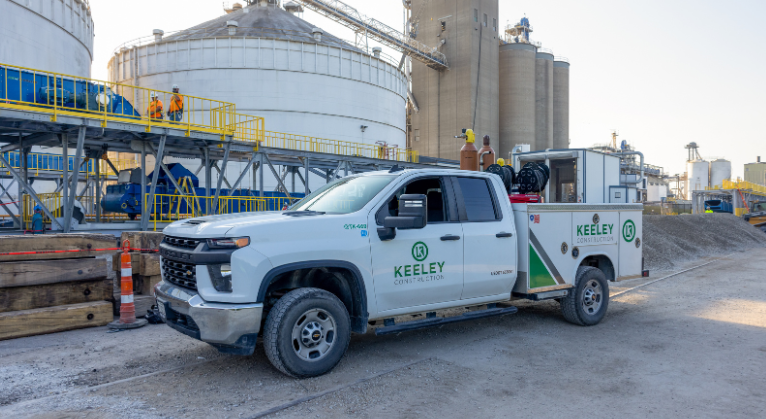
Let’s talk about idle time. In January, Keeley drivers logged more than 720,000 miles. That’s a lot of movement, a lot of work getting done, and a lot of progress being made on our jobs. But our scorecard also showed something worth paying attention to: our company-wide average idle rate is 30.6%. That means almost one-third of the time our engines are on, they’re not actually moving us forward. No one leaves a vehicle running on purpose to waste fuel. It usually happens in small moments — waiting on a load, sitting through a delay, warming up longer than needed, or just getting distracted. But those small moments add up. Across our groups, we’re seeing idle rates range from 20% all the way into the 40% range. That tells us something important: this isn’t about equipment; it’s about habits. Some teams are already proving that lower idle time is possible. And this isn’t just about “being green”. When we let engines idle longer than necessary, it impacts: Fuel costs on our jobs Wear and tear on our trucks and equipment Air quality on and around our jobsites The overall efficiency of how we operate It’s not dramatic. It’s just real. Idle time is one of those things that quietly reflects how tight we run our jobs. When crews are communicating well, when staging is coordinated, and when drivers and operators are thinking ahead, idle time naturally drops. It’s a byproduct of being dialed in. The good news? Fixing it doesn’t require new technology or big changes. It starts with awareness. Simple things make a difference — like shutting down during extended waits, avoiding unnecessary warm-up time, and talking through load timing so trucks aren’t sitting. No one expects perfection. But even a few percentage points of improvement across Keeley would mean real fuel savings and fewer unnecessary emissions across hundreds of thousands of miles. Next time you’re sitting in a running vehicle, ask yourself: Do I need this on right now? One decision doesn’t change much. But hundreds of those decisions do. That’s how culture shifts happen. That’s KeeleyGreen.